
-500x500.jpg "UGREEN DP MALE TO VGA FEMALE CONVERTER (20415)")
| General Information | ||
| Input | Display Port (DP) male x1 | |
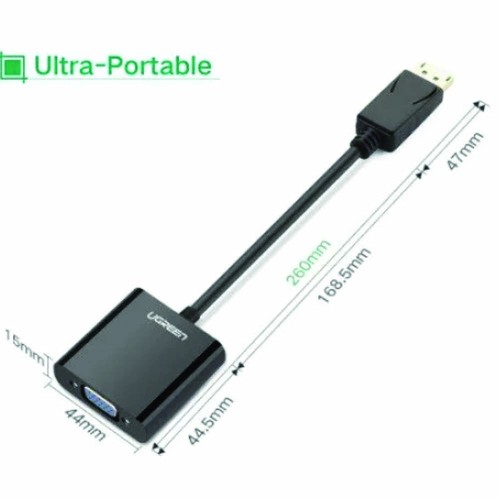
Ugreen 20415 DP male to VGA female converter comes with Input: DisplayPort (DP) male x1, Output: VGA female x1, Plug & play, not driver installation required. This converter compliant with DisplayPort 1.1 a Standard and supports high resolution up to 1080p, 5.4Gbit/s data rate per lane, VGA video bandwidth 10 bit, 162MHZ, low-voltage operation, active 400mW standby 15mW. This is Plug and Play powered from DisplayPort source. This new Supports Windows XP/Vista/7/8/10 amd Mac OS X v10.5 or later DP male to VGA female converter has 01-year warranty.
A male-to-female converter, also known as a gender changer, is a device used to change the gender of a cable or connector. A male connector has pins or plugs, while a female connector has holes or sockets to receive the pins or plugs. Here is a detailed description of male-to-female converters:
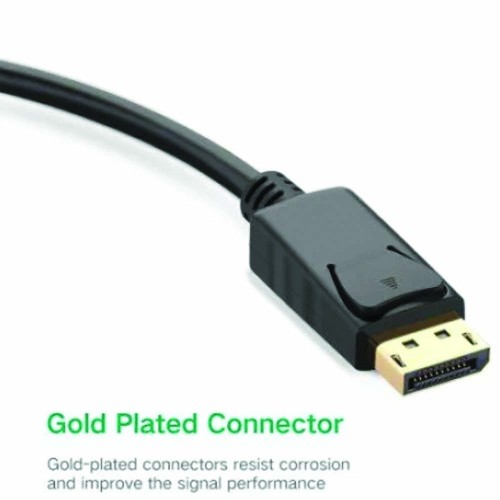
A male-to-female converter typically has a male connector on one end and a female connector on the other end. The connectors may be made of different materials, such as gold-plated or nickel-plated, to provide better signal transmission and protection against corrosion. The converter may also have a molded design with strain relief or flexible cable, which can prevent the cable from breaking or bending at the connector ends.
A male-to-female converter is commonly used in audio and video applications, such as converting a male VGA connector to a female VGA connector, or converting a male HDMI connector to a female HDMI connector. It is also used in networking applications, such as converting a male Ethernet connector to a female Ethernet connector. The male-to-female converter can be useful in situations where you need to connect two cables or devices that have different genders, or create a custom cable by connecting two cables together.
When using a male-to-female converter, it is important to ensure that the cables or devices you are connecting are compatible with each other. For example, you cannot connect an HDMI input to an HDMI output using a male-to-female converter because the input device requires a female connector to receive the signal, while the output device requires a male connector to transmit the signal. Similarly, you cannot connect a male Ethernet cable to a female Ethernet cable using a male-to-female converter because the cables have different wiring configurations.
When using a male-to-female converter, it is important to ensure that the cables or devices you are connecting are not damaged, and the power and signal levels are compatible with each other. Using a male-to-female converter with incompatible devices or high power levels can damage the devices, create safety hazards, or cause a fire. It is also important to ensure that the converter is properly connected and secured to prevent it from becoming loose or disconnected during use.
Get specific details about this product from customers who own it.


